Lift & Shift migration from SAS Code and Data to any Python or PySpark based Modern Data Platforms - Databricks, Snowflake, MS Fabric etc.
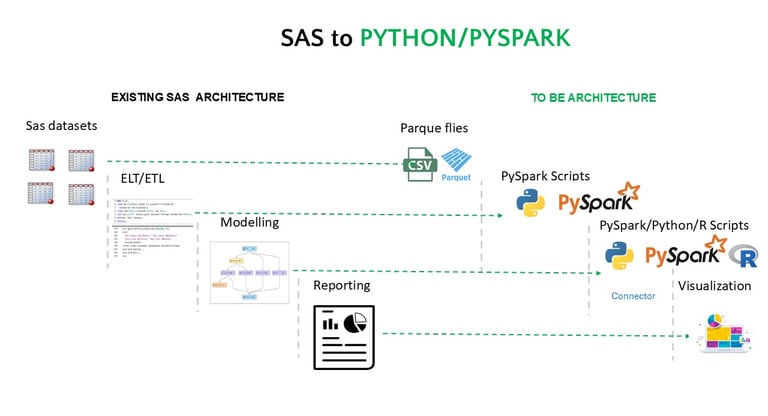
SAS to Python/PySpark
Watch Video

Migrating from SAS to Python or PySpark is a strategic shift from a proprietary, licensed ecosystem to an open-source, scalable environment. This transition typically involves moving to Python (Pandas) for smaller, single-machine workloads or PySpark for large-scale, distributed big data processing...View Details
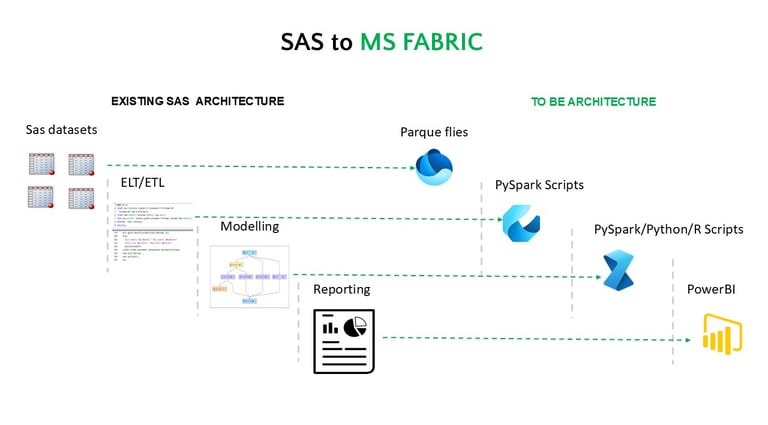
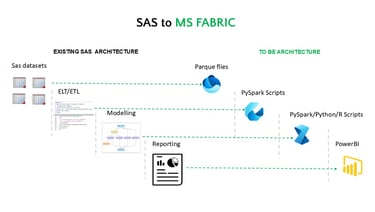
SAS to Microsoft Fabric

Watch Video
Migrating from legacy SAS environments to Microsoft Fabric involves refactoring SAS code, workflows, and statistical models to run on a unified, cloud-native platform. Organizations transition to leverage OneLake storage, scalable Spark compute, and AI-driven capabilities while reducing legacy licensing costs...View details
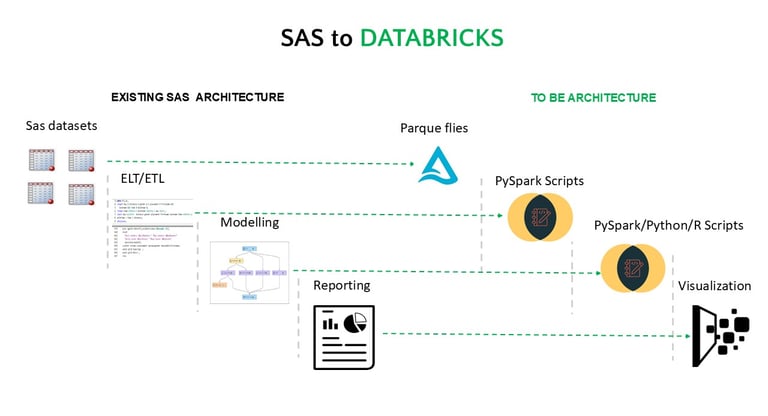
SAS to Databricks
Watch Video

Migrating from SAS to Databricks moves legacy analytics onto a scalable lakehouse architecture. This transition lowers licensing costs, enhances distributed computing speeds, and unlocks modern AI and machine learning capabilities..View Details
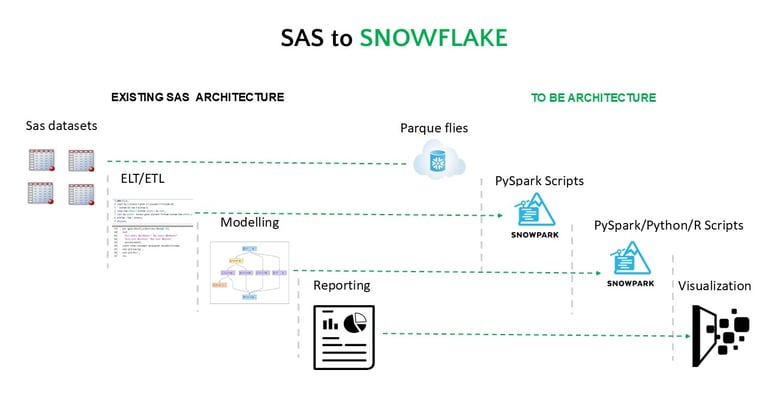
SAS to Snowflake
Watch Video
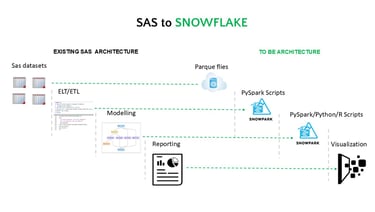
Migrating from SAS to Snowflake involves moving legacy analytical models, datasets, and ETL workflows (e.g., Data Steps, Macros, PROC SQL) into Snowflake's cloud-based data warehouse. This process requires converting proprietary SAS code into modern cloud-friendly languages like SQL or Python using Snowflake’s Snowpark, and migrating data to the cloud...View Details
SAS to Google BigQuery
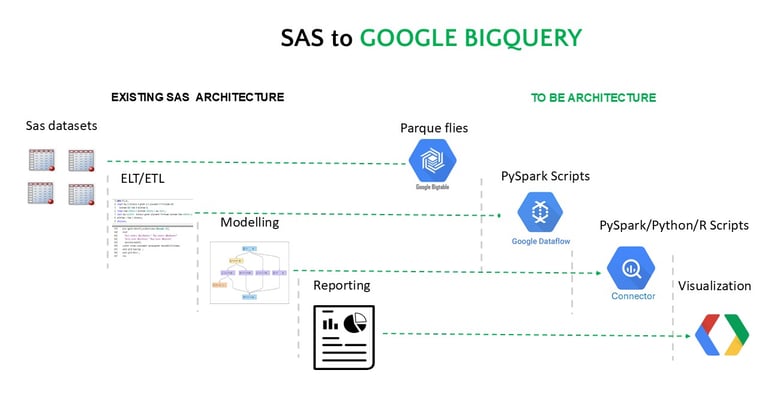
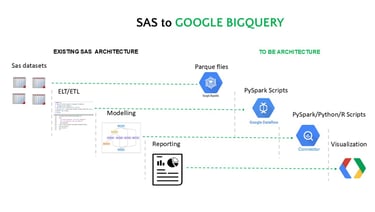
Migrating from SAS to Google BigQuery moves legacy analytics onto a scalable lakehouse architecture. This transition lowers licensing costs, enhances distributed computing speeds, and unlocks modern AI and machine learning capabilities...View Details
SAS to Cloudera
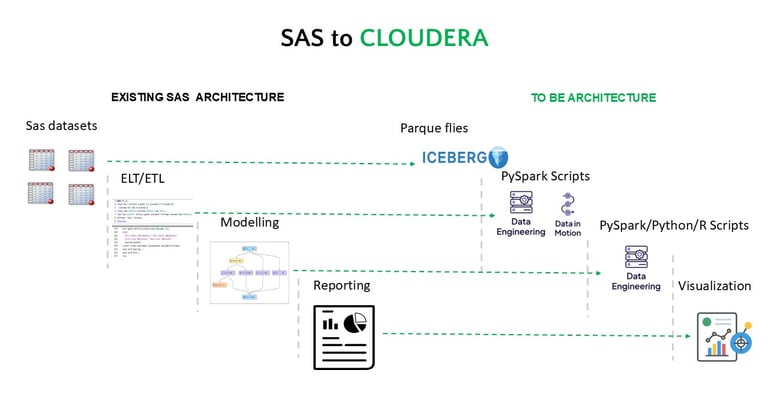
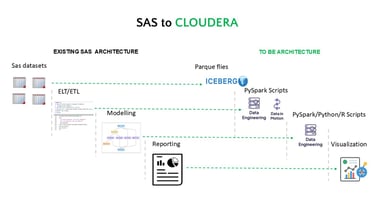
Migrating from SAS to Cloudera Data Platform (CDP) requires transitioning proprietary SAS syntax into distributed, open-source big data frameworks. This involves rewriting legacy PROC SQL into Apache Hive or Impala SQL, and converting DATA Steps and Macros into Apache Spark (using PySpark or Spark SQL) for massively parallel processing... View Details
SAS to Redhat Openshift
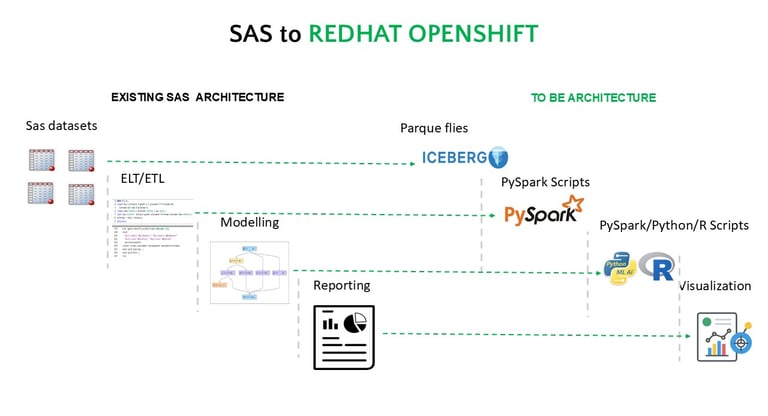
Migrating SAS to Red Hat OpenShift generally involves transitioning from a legacy SAS 9 or SAS Grid environment to SAS Viya deployed on a Kubernetes-native infrastructure. This moves your workloads into scalable, AI-ready containers while adopting the Linux operating system architecture...View Details
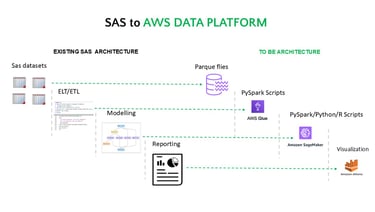
SAS to AWS DataPlatform
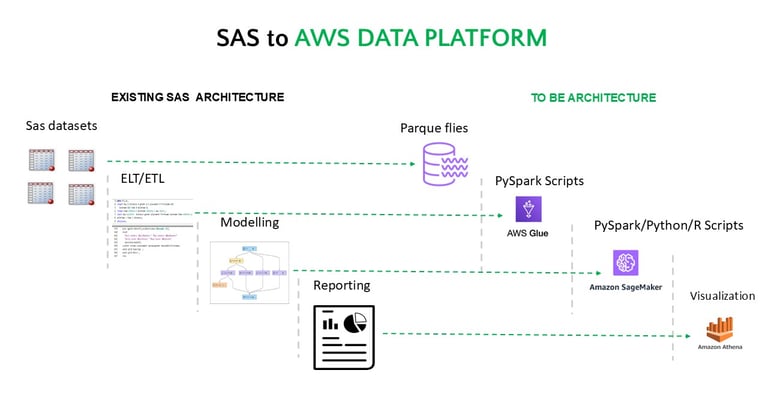
Migrating SAS to AWS involves either rehosting SAS 9 workloads on Amazon EC2 instances, or modernizing by migrating to SAS Viya on Amazon Elastic Kubernetes Service (Amazon EKS). This transition unlocks massive scalability, lower infrastructure costs, and direct integration with modern cloud data lakes...View Details
TARGET AGNOSTIC